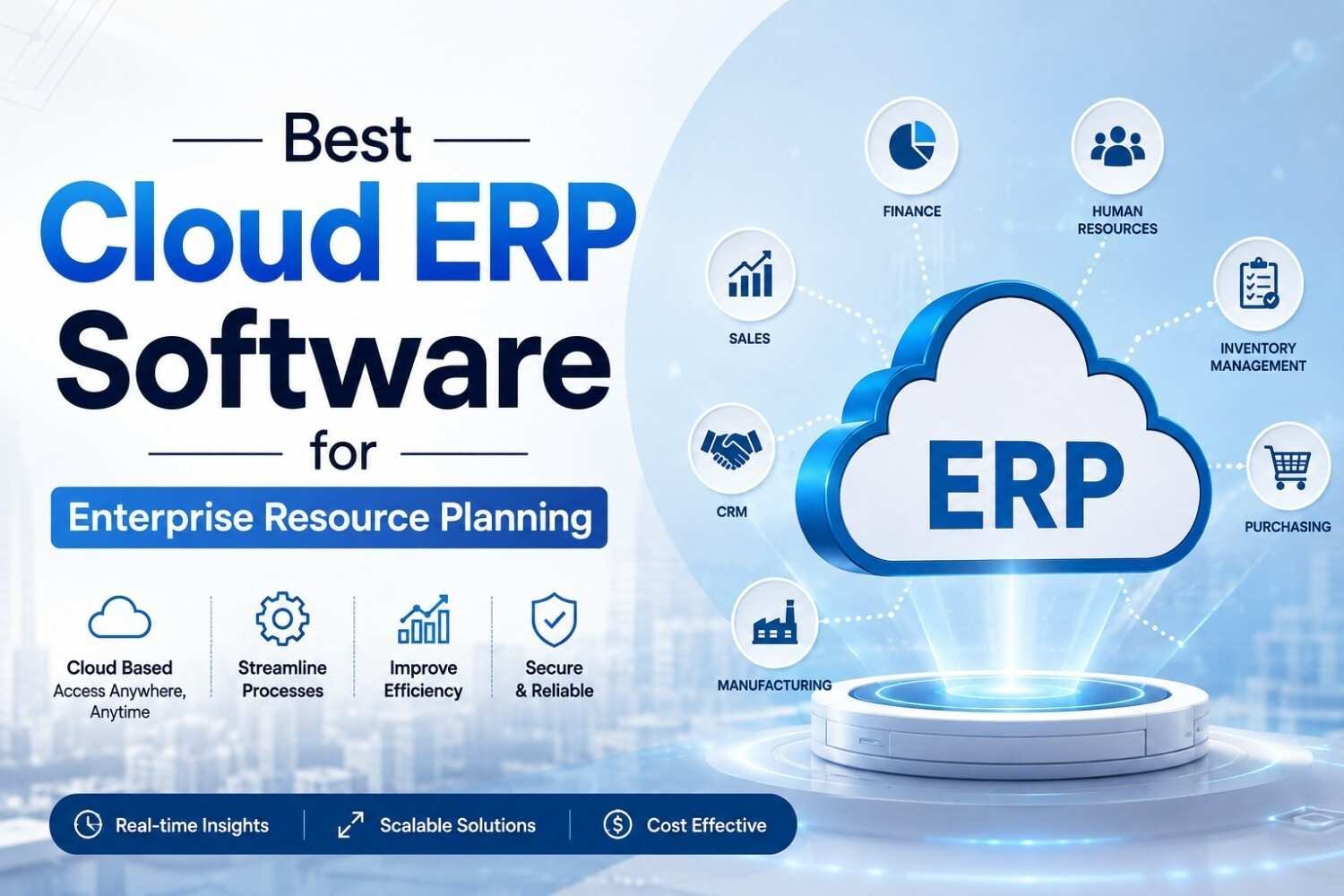
Managing an enterprise in today's competitive business environment requires more than spreadsheets and disconnected software. Organizations need a centralized system that connects finance, inventory, human resources, sales, customer relationships, procurement, manufacturing, and reporting into one intelligent platform. This is where Cloud ERP Software becomes essential.
The Best Cloud ERP Software for Enterprise Resource Planning enables businesses to automate workflows, improve operational efficiency, reduce costs, and make data-driven decisions through real-time analytics and AI-powered automation.
Whether you are a startup, mid-sized business, or global enterprise, cloud ERP helps eliminate manual work while providing scalability, security, and seamless integration across departments.
What is Cloud ERP Software?
Cloud ERP (Enterprise Resource Planning) is an online business management system hosted on cloud servers instead of local infrastructure.
Unlike traditional ERP systems that require expensive hardware and maintenance, cloud ERP provides access through a web browser from anywhere in the world. It combines multiple business functions into a single platform, including finance, accounting, inventory, supply chain, sales, CRM, human resources, procurement, manufacturing, and business intelligence.
Why Businesses Choose Cloud ERP
- Lower Infrastructure Costs – No expensive servers are required.
- Automatic Updates – Software updates happen automatically without IT intervention.
- Anywhere Access – Employees can securely access data from any location.
- AI Automation – Modern ERP platforms use Artificial Intelligence for forecasting, analytics, and automation.
- Better Collaboration – Every department works with real-time information.
- Improved Security – Enterprise-grade encryption keeps business data secure.
Key Features of the Best Cloud ERP Software
1. Financial Management
General Ledger, Accounts Payable, Accounts Receivable, Budget Planning, and Tax Management.
2. Inventory Management
Real-time inventory tracking, barcode management, warehouse tracking, stock alerts, and multi-location inventory.
3. CRM Integration
Lead tracking, sales pipeline, customer history, and email automation.
4. Supply Chain Management
Purchase orders, vendor management, shipment tracking, and demand forecasting.
5. Human Resource Management
Payroll, attendance, recruitment, employee performance, and leave management.
6. AI Analytics
Sales forecasting, business intelligence dashboards, predictive analytics, and AI reports.
Cloud ERP vs Traditional ERP
| Feature | Cloud ERP | Traditional ERP |
|---|---|---|
| Initial Cost | Low | High |
| Maintenance | Vendor Managed | Company Managed |
| Updates | Automatic | Manual |
| Remote Access | Yes | Limited |
| Scalability | Excellent | Moderate |
| Deployment Time | Fast | Slow |
| Security | Enterprise Grade | Depends on IT |
Best Cloud ERP Software in 2026
1. Oracle NetSuite
Best for global enterprises with advanced financial management. Key features include financial management, inventory, CRM, procurement, and AI analytics.
2. SAP S/4HANA Cloud
Ideal for large manufacturing organizations with real-time analytics, AI automation, and supply chain optimization.
3. Microsoft Dynamics 365
Excellent for businesses already using Microsoft products. Features include CRM integration, finance, HR, and sales automation.
4. Oracle Fusion Cloud ERP
Designed for enterprise organizations with AI insights, financial planning, procurement, and risk management.
5. Acumatica Cloud ERP
Perfect for growing businesses with inventory, CRM, accounting, and mobile ERP capabilities.
6. Epicor ERP
Popular among manufacturers with production planning, warehouse management, and supply chain strengths.
How to Choose the Best Cloud ERP Software
Before investing, consider business size, budget, industry requirements, AI features, CRM integration, security standards, customer support, mobile accessibility, third-party integrations, and scalability.
Future of Cloud ERP
- Artificial Intelligence
- Machine Learning
- Predictive Analytics
- IoT Integration
- Blockchain
- Robotic Process Automation (RPA)
- Generative AI Assistants
- Voice-Controlled ERP
- Hyper Automation
Frequently Asked Questions
Which is the best Cloud ERP Software?
Oracle NetSuite, SAP S/4HANA Cloud, Microsoft Dynamics 365, Oracle Fusion Cloud ERP, Acumatica, and Epicor are among the leading cloud ERP solutions in 2026.
Is Cloud ERP secure?
Yes. Most enterprise cloud ERP providers use encryption, multi-factor authentication, role-based access controls, and compliance certifications to protect business data.
Who should use Cloud ERP?
Cloud ERP is suitable for startups, SMBs, and large enterprises that want to integrate finance, operations, HR, inventory, and customer management into a single platform.
Conclusion
Choosing the Best Cloud ERP Software for Enterprise Resource Planning is a strategic investment that can transform how an organization manages operations, finances, supply chains, customer relationships, and workforce productivity. Modern cloud ERP platforms provide AI-powered automation, real-time analytics, enterprise-grade security, and the flexibility to scale with business growth.
Before making a decision, evaluate your organization's size, industry requirements, budget, integration needs, and long-term expansion plans. A well-implemented cloud ERP solution can improve efficiency, reduce operational costs, enhance collaboration, and provide the insights needed to stay competitive in today's fast-changing business environment.